When the builder might be the hacker.
By Maxime Laurent · 2026-04-07 06:09
When the builder might be the hacker.
Reports suggest DPRK-linked devs may have contributed to major DeFi projects like Sushi, Yearn, and Fantom for years.
This one hits differently. Not a hack, not a flashy exploit — but something slower, deeper… almost invisible. The idea that someone could spend years inside the ecosystem, writing code, reviewing PRs, chatting in Discord like everyone else — and all along, playing a completely different game.
Taylor Monahan didn’t talk about some random incident. This is about infiltration at the roots of DeFi — back in the wild days of 2020, when things were shipping fast, vibes were high, and honestly… nobody was thinking about state-level adversaries hiding behind GitHub profiles.
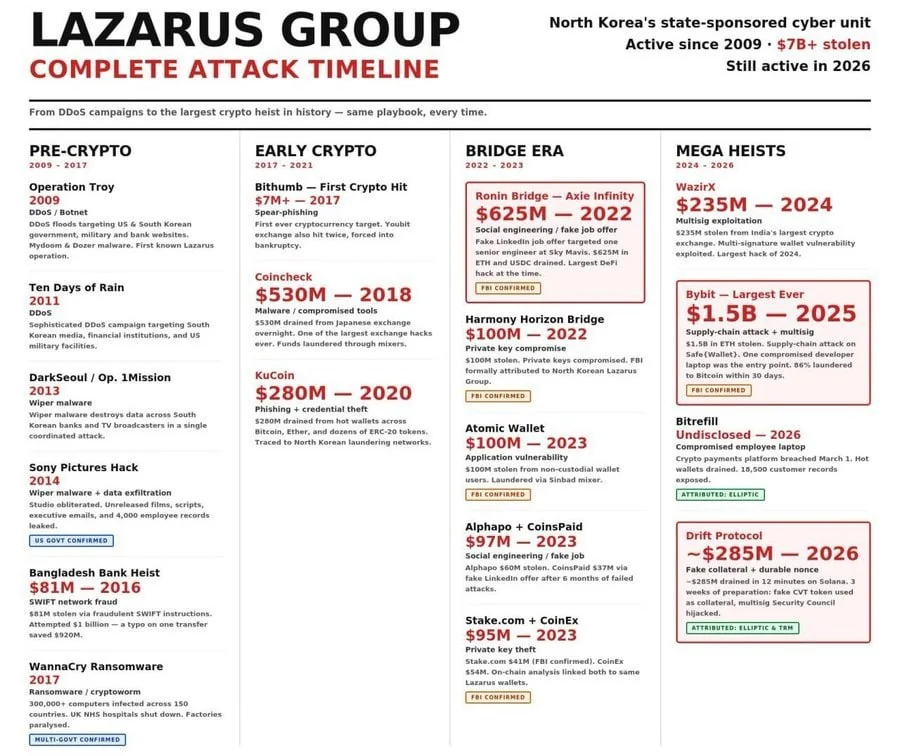
And when you connect that with Lazarus Group — suddenly it’s not just “crypto risk” anymore. It’s geopolitical. Since 2017, they’ve reportedly extracted around $7B from the ecosystem. That’s not hacking for fun — that’s strategy.
What fascinates me is how normal it all looks on the surface. These developers pass interviews, contribute clean code, build reputations. No red flags. Just time, patience, and precision.
It forces a question we don’t like to ask: how much of crypto is built on trust we never verified?
Because DeFi loves to say “don’t trust, verify”… but let’s be honest — most people can’t read smart contracts, and even fewer can audit a dev’s identity across borders.
So yeah, the next cycle will bring new narratives — AI, RWAs, whatever comes next. But under the hood, security is quietly becoming the real meta.
Stay sharp. In crypto, not every builder is here to build… mon pote. 🕶
#Crypto #DeFi #Security #Blockchain #Lazarus #Web3
Reports suggest DPRK-linked devs may have contributed to major DeFi projects like Sushi, Yearn, and Fantom for years.
This one hits differently. Not a hack, not a flashy exploit — but something slower, deeper… almost invisible. The idea that someone could spend years inside the ecosystem, writing code, reviewing PRs, chatting in Discord like everyone else — and all along, playing a completely different game.
Taylor Monahan didn’t talk about some random incident. This is about infiltration at the roots of DeFi — back in the wild days of 2020, when things were shipping fast, vibes were high, and honestly… nobody was thinking about state-level adversaries hiding behind GitHub profiles.
And when you connect that with Lazarus Group — suddenly it’s not just “crypto risk” anymore. It’s geopolitical. Since 2017, they’ve reportedly extracted around $7B from the ecosystem. That’s not hacking for fun — that’s strategy.
What fascinates me is how normal it all looks on the surface. These developers pass interviews, contribute clean code, build reputations. No red flags. Just time, patience, and precision.
It forces a question we don’t like to ask: how much of crypto is built on trust we never verified?
Because DeFi loves to say “don’t trust, verify”… but let’s be honest — most people can’t read smart contracts, and even fewer can audit a dev’s identity across borders.
So yeah, the next cycle will bring new narratives — AI, RWAs, whatever comes next. But under the hood, security is quietly becoming the real meta.
Stay sharp. In crypto, not every builder is here to build… mon pote. 🕶
#Crypto #DeFi #Security #Blockchain #Lazarus #Web3
Disclaimer: This content is for informational purposes only and not financial advice.