When nature flips the breaker on $BTC.
By Maxime Laurent · 2026-01-26 08:41
When nature flips the breaker on $BTC.
A winter storm just reminded miners who’s really in charge: not ASICs, not capital — the grid.
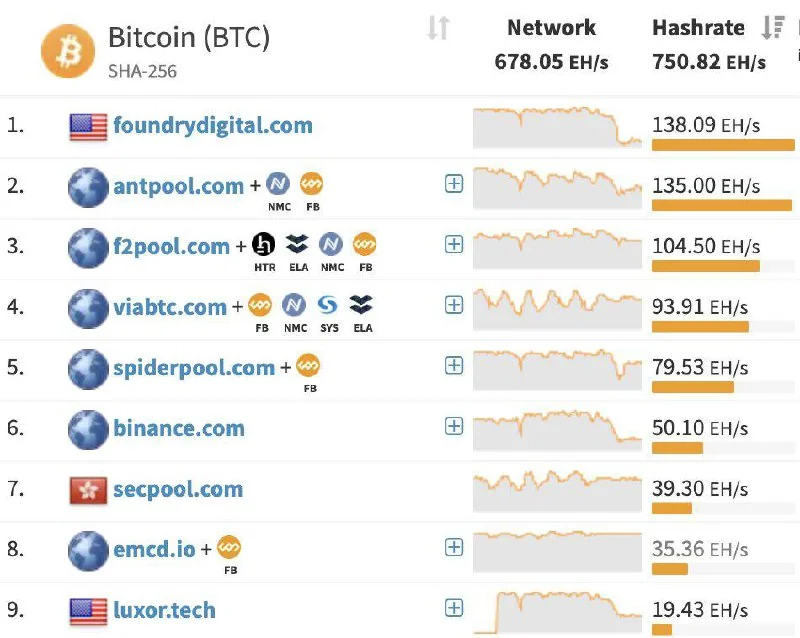
The US got slammed by winter storm “Fern”, and the impact was brutal. The hashrate of FoundryUSA, the largest bitcoin miner/pool in the world, dropped nearly 60% — about 200 EH/s gone in a flash ❄️⚡️
Several states declared a state of emergency. Power consumption limits kicked in to protect the grid, while many households were left completely without electricity. When it’s a choice between heating homes and securing blocks, Bitcoin politely steps aside.
On-chain, the effect was immediate. Block times slowed from the usual ~8 minutes to 12 minutes. The network didn’t break. It just… breathed slower. Proof-of-work doing exactly what it was designed to do.
Some experts are already calling this crisis more serious than the infamous Texas grid collapse of 2021. And honestly, I get why. This wasn’t just one state messing up — it was systemic stress across regions that host massive mining infrastructure.
From my warm Mediterranean bubble, this hits different. It’s a sharp reminder that mining isn’t just about hashrate charts and ROI models. It’s about weather, grids, politics, and physical reality. Le réel, quoi.
Bitcoin survived. It always does. But events like this quietly reshape where and how the next generation of mining will live 🌬
#Bitcoin #BTC #Mining #Hashrate #EnergyGrid #ProofOfWork #CryptoFriture
A winter storm just reminded miners who’s really in charge: not ASICs, not capital — the grid.
The US got slammed by winter storm “Fern”, and the impact was brutal. The hashrate of FoundryUSA, the largest bitcoin miner/pool in the world, dropped nearly 60% — about 200 EH/s gone in a flash ❄️⚡️
Several states declared a state of emergency. Power consumption limits kicked in to protect the grid, while many households were left completely without electricity. When it’s a choice between heating homes and securing blocks, Bitcoin politely steps aside.
On-chain, the effect was immediate. Block times slowed from the usual ~8 minutes to 12 minutes. The network didn’t break. It just… breathed slower. Proof-of-work doing exactly what it was designed to do.
Some experts are already calling this crisis more serious than the infamous Texas grid collapse of 2021. And honestly, I get why. This wasn’t just one state messing up — it was systemic stress across regions that host massive mining infrastructure.
From my warm Mediterranean bubble, this hits different. It’s a sharp reminder that mining isn’t just about hashrate charts and ROI models. It’s about weather, grids, politics, and physical reality. Le réel, quoi.
Bitcoin survived. It always does. But events like this quietly reshape where and how the next generation of mining will live 🌬
#Bitcoin #BTC #Mining #Hashrate #EnergyGrid #ProofOfWork #CryptoFriture
Disclaimer: This content is for informational purposes only and not financial advice.