Trust Wallet fights address poisoning.
By Maxime Laurent · 2026-03-10 16:14
Trust Wallet fights address poisoning.
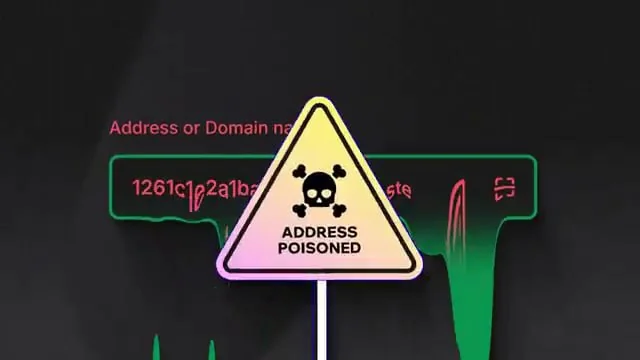
Quick take: Trust Wallet now warns you if a crypto address looks suspiciously similar to one in your history — a move against a common scam.
I’ve seen this scam catch even experienced people, and honestly it’s one of the sneakiest tricks in crypto right now. Address poisoning works because most of us don’t actually read full wallet addresses — we just glance at the first and last characters and send. That little habit is exactly what scammers exploit.
Here’s how it usually plays out. A scammer sends you a tiny transaction from an address that looks almost identical to one you previously interacted with. Later, when you want to send funds again, you open your transaction history, copy what you think is the right address… but it’s the fake one. Boom — your $ETH or $USDT is gone.
Trust Wallet just added a protection layer against this. Before sending funds, the app now analyzes the destination address and flags it if it resembles a known address-poisoning pattern. Basically a last-minute “are you sure?” moment before the transaction goes through.
The feature is already live on mobile and supports 32 EVM networks, which covers most of the ecosystem where these scams happen — from $ETH mainnet to the usual L2s.
Personally, I like this move. Wallet UX has been the weak point of crypto for years. Security shouldn’t depend only on users being hyper-vigilant all the time. Smart warnings like this are exactly what we need as more people enter the space.
Crypto is still a bit of the wild west… but slowly, the sheriffs are showing up. Pas mal. 🤠
#Crypto #Security #TrustWallet #Ethereum #Scams #Web3
Quick take: Trust Wallet now warns you if a crypto address looks suspiciously similar to one in your history — a move against a common scam.
I’ve seen this scam catch even experienced people, and honestly it’s one of the sneakiest tricks in crypto right now. Address poisoning works because most of us don’t actually read full wallet addresses — we just glance at the first and last characters and send. That little habit is exactly what scammers exploit.
Here’s how it usually plays out. A scammer sends you a tiny transaction from an address that looks almost identical to one you previously interacted with. Later, when you want to send funds again, you open your transaction history, copy what you think is the right address… but it’s the fake one. Boom — your $ETH or $USDT is gone.
Trust Wallet just added a protection layer against this. Before sending funds, the app now analyzes the destination address and flags it if it resembles a known address-poisoning pattern. Basically a last-minute “are you sure?” moment before the transaction goes through.
The feature is already live on mobile and supports 32 EVM networks, which covers most of the ecosystem where these scams happen — from $ETH mainnet to the usual L2s.
Personally, I like this move. Wallet UX has been the weak point of crypto for years. Security shouldn’t depend only on users being hyper-vigilant all the time. Smart warnings like this are exactly what we need as more people enter the space.
Crypto is still a bit of the wild west… but slowly, the sheriffs are showing up. Pas mal. 🤠
#Crypto #Security #TrustWallet #Ethereum #Scams #Web3
Disclaimer: This content is for informational purposes only and not financial advice.